

Bleeding or spotting between periods during perimenopause can feel alarming. However, it’s very common as hormone levels fluctuate. In fact, a recent review notes that abnormal uterine bleeding in perimenopause is often a normal physiological response. Many women experience changes such as heavier or longer bleeds or erratic spotting. For example, one large study found that 77% of perimenopausal women had at least a few cycles with more than 10 days of bleeding.
That said, a doctor should check any unexpected bleeding. The NHS advises that bleeding between periods (or after sex) can have many causes – hormonal changes, small growths like polyps or fibroids, infections, and more. It’s usually not serious, but always get unusual bleeding evaluated. This article explains common causes of perimenopausal spotting, which symptoms are warning signs, and what the NHS will do to investigate.
What Counts as Bleeding Between Periods?
“Bleeding between periods” (intermenstrual bleeding) means any vaginal bleeding outside your normal cycle. This can include:
- Light spotting or brown discharge between periods.
- Mid-cycle bleeding, unrelated to your usual period.
- Breakthrough bleeding, when you thought your period was finished.
- Bleeding after sex (postcoital bleeding) often comes from cervical causes.
During perimenopause, these patterns often arise due to hormonal fluctuations. Estrogen and progesterone levels fluctuate unpredictably, which can cause the uterine lining to shed at irregular times. For example, anovulatory cycles (when no egg is released) can leave the lining thick, leading to unpredictable bleeding. A short luteal phase (low progesterone) can cause spotting before your period. As Dr. Newson explains, occasional light spotting in perimenopause is usually due to these hormone changes.
However, any bleeding outside your usual period is technically abnormal, so pay attention to how often it happens and how heavy it is.
Common Causes
Several factors can cause bleeding between periods in perimenopause:
- Hormonal cycle changes: The most frequent cause. Fluctuating estrogen or progesterone can disrupt the normal cycle. Irregular ovulation often leads to spotting or “ghost” periods. For instance, a missed ovulation can let the lining overgrow and then shed suddenly, or a dip in progesterone can cause mid-cycle bleeding. In short, normal perimenopausal hormone swings can easily cause odd bleeds.
- Uterine fibroids, polyps, or thick lining. Benign uterine growths increase with age. Fibroids (noncancerous muscle tumors) and endometrial polyps often cause spotting or heavier flows. A thickened lining (endometrial hyperplasia) from prolonged estrogen exposure can also bleed. Ultrasound or hysteroscopy can usually detect these. For example, a fibroid near the cavity might cause prolonged bleeding, while a small polyp often causes recurrent spotting.
- Cervical or vaginal causes. Not all bleeding comes from the uterus. Cervical ectropion (benign cervical cell changes) or cervical polyps can bleed, especially after sex. Vaginal atrophy (dryness and thinning of tissues due to falling estrogen) is common in this age group and can lead to spotting, particularly with intercourse. Sexually transmitted infections or cervicitis are also checked for, though they’re less common in the menopausal transition.
- Hormones or contraception. If you’re on hormone therapy, unscheduled bleeding is expected—up to 40% of women starting sequential HRT experience breakthrough bleeding in the first few months. The British Menopause Society notes this often settles as the body adjusts. Likewise, changes in contraceptives (like progestin-only pills or a new IUS) can trigger spotting.
- Other medical issues. Conditions such as thyroid disorders, clotting problems, or infections can lead to irregular bleeding, though this is less common. In very rare cases, tumors (like ovarian or uterine cancer) can cause bleeding. Because any vaginal bleeding can potentially signal cancer, the NHS advises checking all unusual bleeding.
In practice, hormonal ups and benign growths are the usual culprits.
Red Flags: When to See a Doctor
Certain bleeding patterns should prompt medical advice. Make an appointment if you notice:
- Heavier or prolonged bleeding. Soaking through sanitary products quickly, or bleeding lasting longer than about a week, is a warning sign. (Periods lasting 8+ days are considered unusually long.)
- Bleeding after sex. Any vaginal bleeding following intercourse should be checked.
- Bleeding after 12 months without periods. This is postmenopausal bleeding and warrants an urgent referral.
- Pain or systemic symptoms. Severe pelvic pain, dizziness, or faintness with bleeding needs prompt attention. (For example, missed periods with pain and bleeding could indicate an ectopic pregnancy.)
- Recurring spotting. If you’re spotting every cycle, even if it’s light, mention it to your GP.
- Signs of anemia. Extreme fatigue, shortness of breath, or palpitations can result from heavy bleeding. If you experience these, discuss them with your doctor.
The NHS repeatedly stresses: always report unusual vaginal bleeding. Most causes will be benign, but these red flags ensure that serious problems are not overlooked.
What to Expect at the GP
When you visit your GP about bleeding between periods, the approach is systematic:
- History. The doctor will ask about your menstrual cycle (when it started, length, flow changes), details of the bleeding, and any contraceptive or HRT use. They will also discuss other health factors (like PCOS or thyroid issues) to guide the evaluation.
- Examination. A pelvic exam is standard. A speculum exam lets the GP look at the cervix and vagina (checking for polyps, ectropion, infection). A bimanual exam (feeling the uterus and ovaries) checks for fibroids or tenderness.
- Basic tests. A pregnancy test (urine or blood) is routine to rule out pregnancy. The GP will often do blood tests – notably a full blood count to check for anemia if bleeding has been heavy. Other tests (e.g., thyroid function tests) may be performed if needed.
- Follow-up/referral. If no obvious cause is found or bleeding continues, your GP will arrange further steps. This usually means an ultrasound scan or a referral to a gynaecologist. The GP will explain why a referral is needed and what tests will follow. They may also ensure your cervical screening is up to date, since unexplained bleeding could relate to cervical issues.
In the UK, any bleeding after menopause (≥12 months with no period) must be referred urgently. For perimenopausal bleeding, the GP follows the standard pathway and makes referrals as indicated.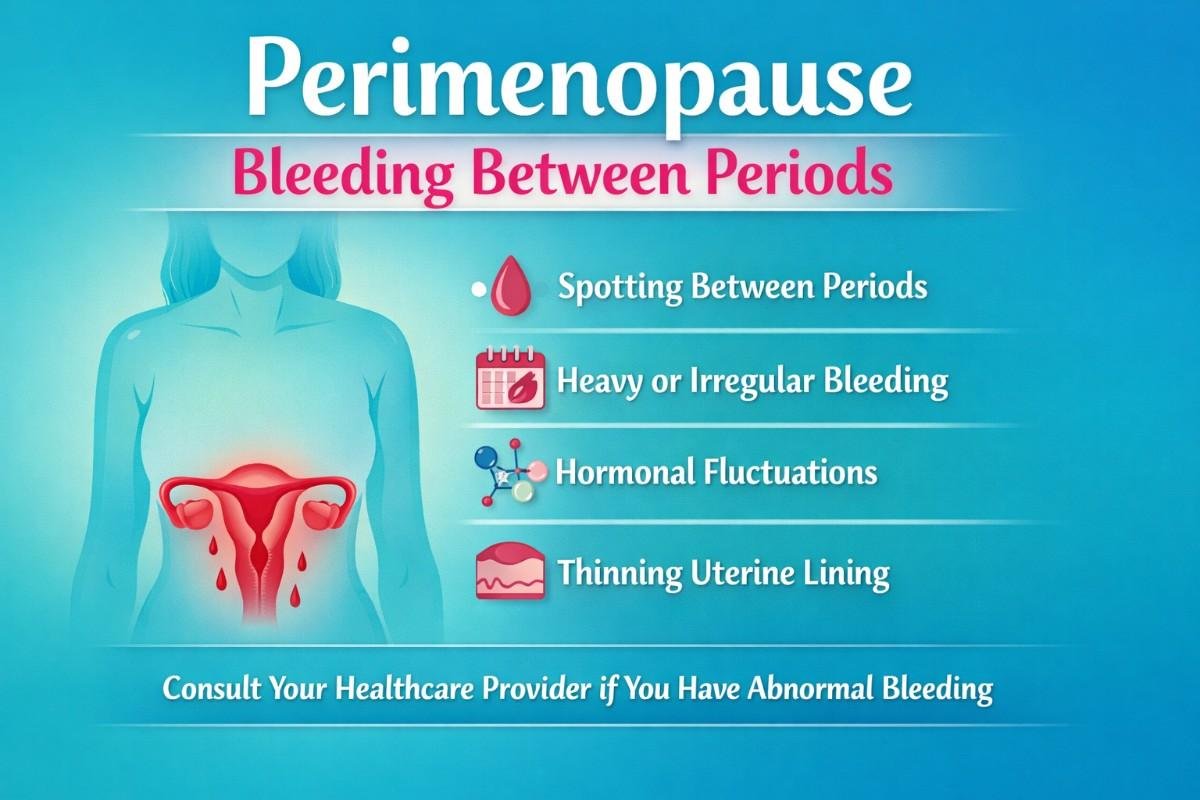
Investigations and Specialist Steps
If you see a specialist, these are common next steps:
- Transvaginal Ultrasound (TVS): A tiny ultrasound probe checks the uterus and ovaries. It measures endometrial thickness and can detect fibroids, cysts, or polyps. NICE recommends an ultrasound, especially if a pelvic mass is suspected.
- Hysteroscopy: If TVS or symptoms suggest an intrauterine problem, an outpatient hysteroscopy may be done. A thin camera is passed through the cervix into the uterine cavity. It allows the doctor to see inside and remove any polyps immediately. NICE advises offering hysteroscopy to women with intermenstrual bleeding and risk factors like fibroids or polyps.
- Endometrial Biopsy: During hysteroscopy, the doctor can take a tiny tissue sample from the uterine lining for analysis. This checks for any atypical cells or precancerous changes. NICE specifically recommends sampling the lining during hysteroscopy in high-risk patients.
- Additional tests: In some cases, a special ultrasound (saline infusion) or an MRI may be used to evaluate for adenomyosis or complex fibroids. However, most diagnoses are made with TVS and hysteroscopy.
Through these steps, specialists usually find the cause. Often it’s a benign polyp or fibroid that can be removed. If the lining is normal and no cause is found, doctors may choose to monitor you.
Management and Treatment Options
If bleeding is heavy or troublesome, medical treatments can help. Tranexamic acid (an antifibrinolytic) or NSAIDs (e.g., mefenamic acid) can reduce bleeding in the short term. Hormonal treatments may be used to stabilize the uterine lining: options include short courses of oral progestogens, combined oral contraceptive pills, or a levonorgestrel-releasing IUS (Mirena coil), which thins the lining. NICE guidelines even support trying pharmacological treatment first if your history and exam suggest a low risk of serious pathology. If these options don’t control the bleeding, more invasive treatments exist. For example, small polyps or fibroids can be removed via hysteroscopy, and endometrial ablation or even hysterectomy may be considered in severe cases.
Postmenopausal Bleeding vs. Perimenopause
One final distinction: menopause is defined after 12 months without a period. If you have any bleeding after this time, it is postmenopausal bleeding. The NHS is clear that even a small bleed after menopause can be a sign of cancer, so it is treated urgently.
If you are still in perimenopause (getting sporadic periods), bleeding is managed as above with stepwise GP referral and investigations.
Summary
Bleeding between periods in perimenopause is often due to normal hormonal changes, and many women experience occasional spotting. However, always report unusual bleeding to your GP. Key points:
- Spotting can be normal if it’s light and occasional, but heavy, recurrent, or postcoital bleeding should prompt a check-up.
- Usual causes: Hormonal fluctuations are the most common cause, but fibroids, polyps, cervical changes, or medication effects also contribute.
- NHS approach: The GP will assess your symptoms and perform basic tests (a pregnancy test, blood tests, and an exam). Often an ultrasound scan follows, with hysteroscopy/biopsy if needed.
- Treatment: Many cases are managed medically (tranexamic acid, NSAIDs, progesterone, Mirena) if appropriate, sometimes even before scans.
- Track your bleeding: Keep a simple diary of any spotting or bleeding (dates and flow). This can help both you and your doctor see any patterns.
- When to worry: Bleeding after menopause, or bleeding that is heavy, persistent, or after sex, should be checked promptly.
The NHS has clear guidelines and experienced clinicians ready to help you identify the cause and find the right treatment. With the right evaluation and treatment plan, most perimenopausal bleeding issues can be effectively managed and resolved. Your healthcare team will use tests like ultrasound and hysteroscopy when needed. Remember, if something feels off with your cycles, your GP is there to help figure it out.
Book appointment confidential perimenopause bleeding check
If you’re noticing bleeding between periods, don’t guess. Get a clinician-led assessment and a clear next-step plan.
Sorces:
https://www.drlouisenewson.co.uk/knowledge/vaginal-bleeding-during-perimenopause-and-menopause
https://www.nhs.uk/symptoms/vaginal-bleeding-between-periods-or-after-sex/
https://thebms.org.uk/wp-content/uploads/2024/12/01-BMS-GUIDELINE-Management-of-unscheduled-bleeding-HRT-NOVEMBER2024-A.pdf
https://www.nice.org.uk/guidance/ng88/chapter/recommendations
Frequently Asked Questions
Can you go through perimenopause and still have periods?
Yes. Perimenopause happens before menopause, so you can still have periods, but they may become irregular. Menopause is only confirmed after 12 months with no bleeding.
Is bleeding between periods perimenopause?
It can be, but it is not always perimenopause. Bleeding between periods has multiple causes, so it should be checked, especially if it is new or keeps happening.
Can perimenopause cause bleeding between periods?
Yes. Hormone changes during perimenopause can cause irregular bleeding, including spotting or bleeding between periods.
Can hormones cause bleeding between periods?
Yes. Hormonal changes can affect the uterine lining and lead to irregular bleeding, including between periods. Hormonal contraception can also cause breakthrough bleeding.
What would cause a woman to bleed between periods?
Common causes include hormonal contraception, perimenopause hormone changes, fibroids, polyps, infections or STIs, pregnancy-related causes, and sometimes more serious conditions, which is why evaluation is recommended.
What causes bleeding in the middle of a menstrual cycle?
Mid-cycle bleeding can be caused by hormonal fluctuations, contraception-related breakthrough bleeding, fibroids or polyps, infections or STIs, or pregnancy-related causes. If it is new, recurrent, heavy, or happens after sex, it should be checked.